
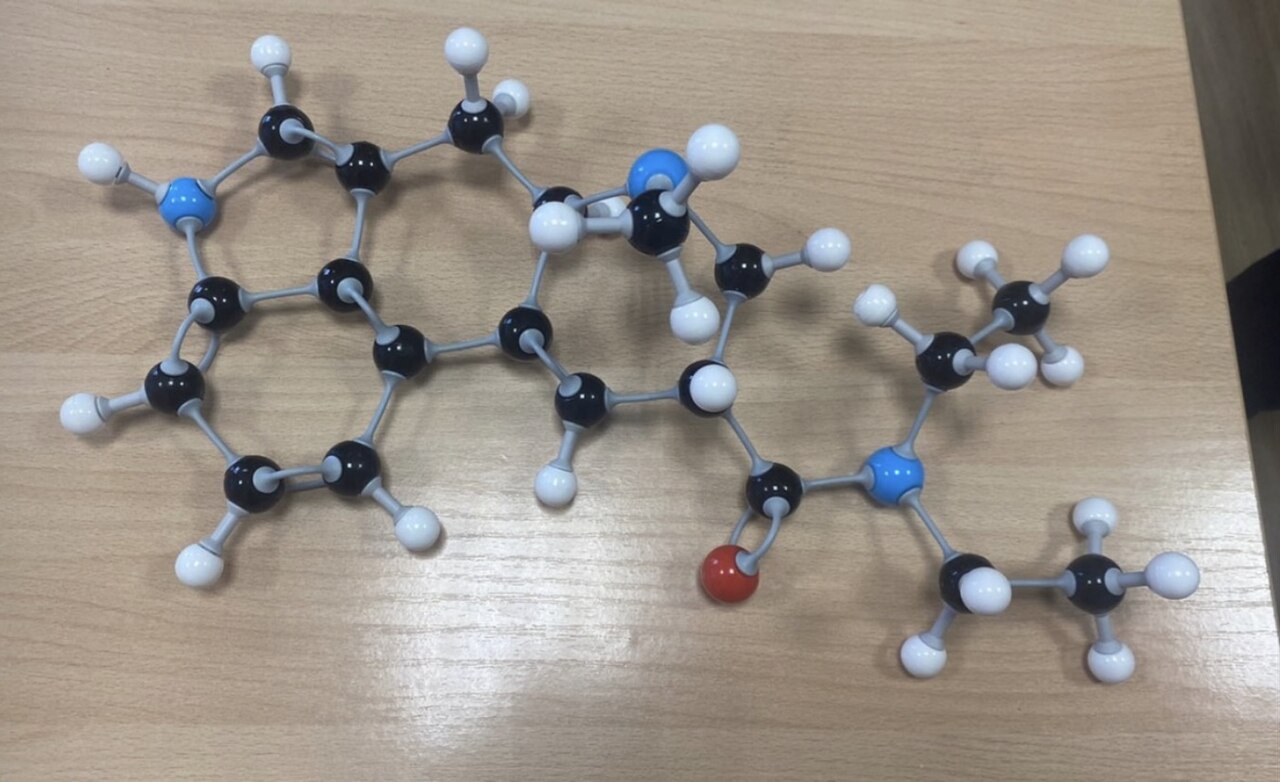
LSD
A potent psychedelic drug derived from ergot.

WikiLinuz · CC BY-SA 4.0
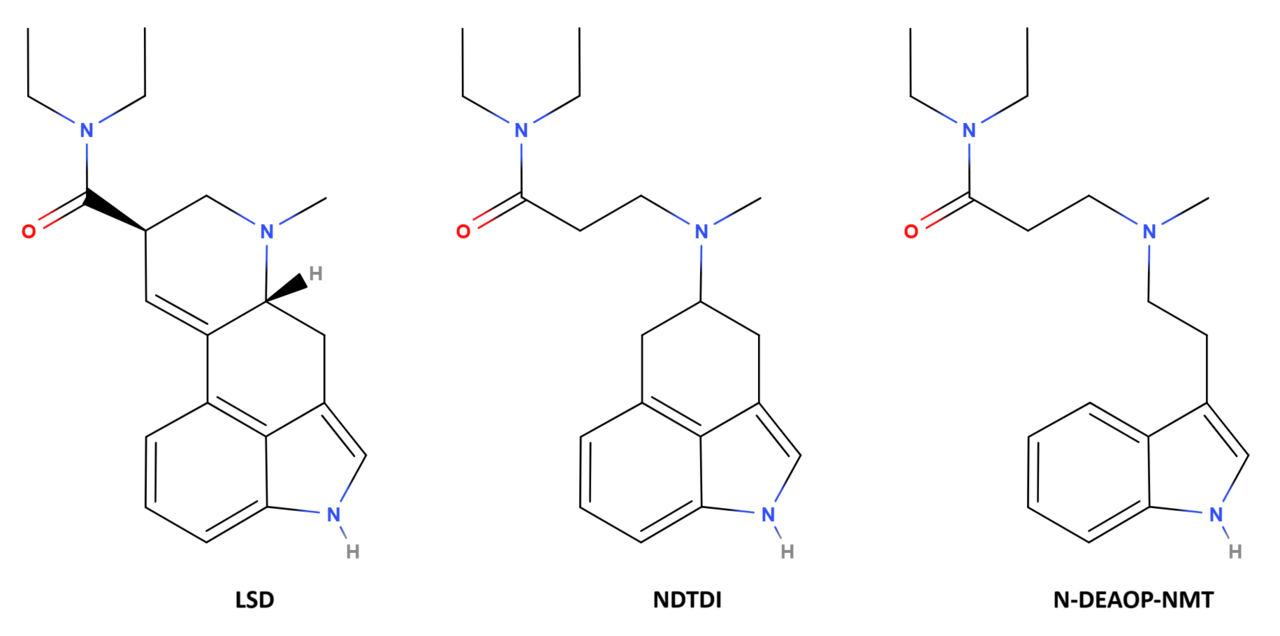
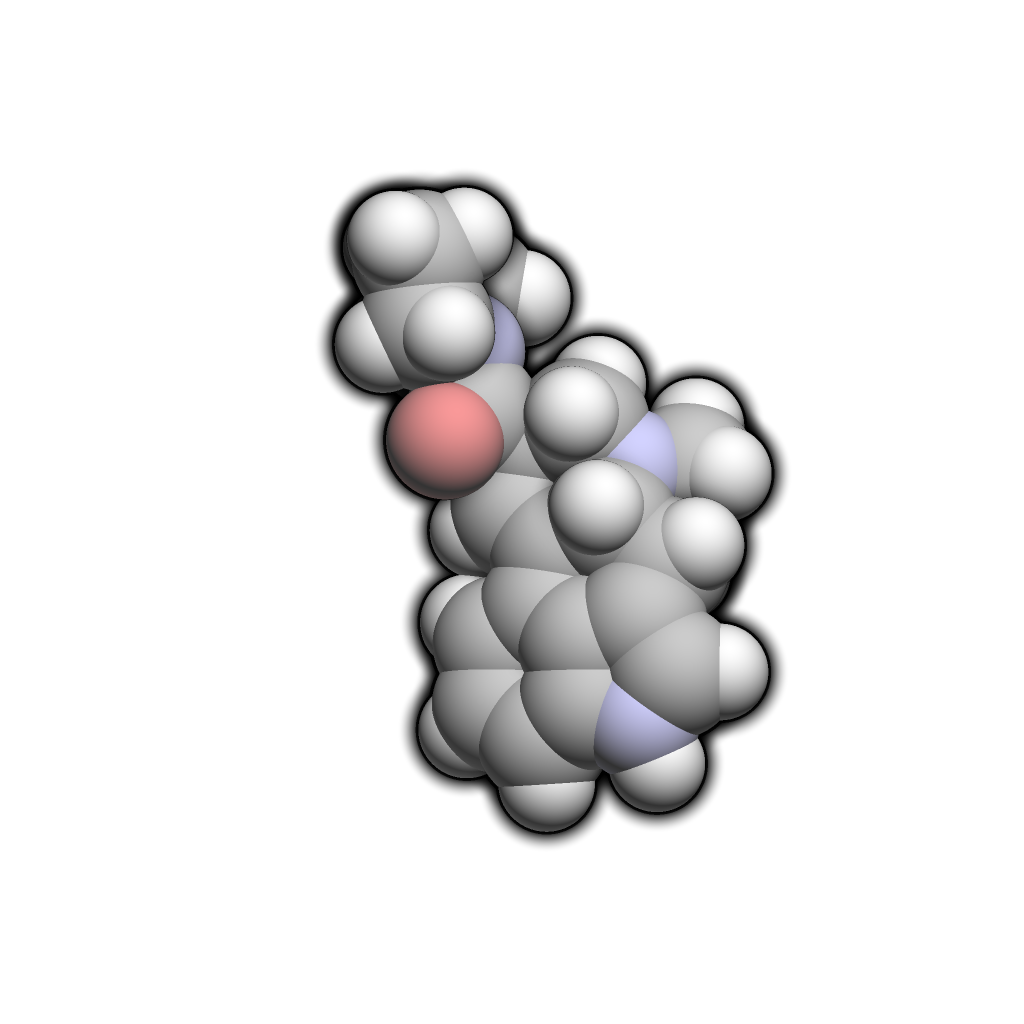
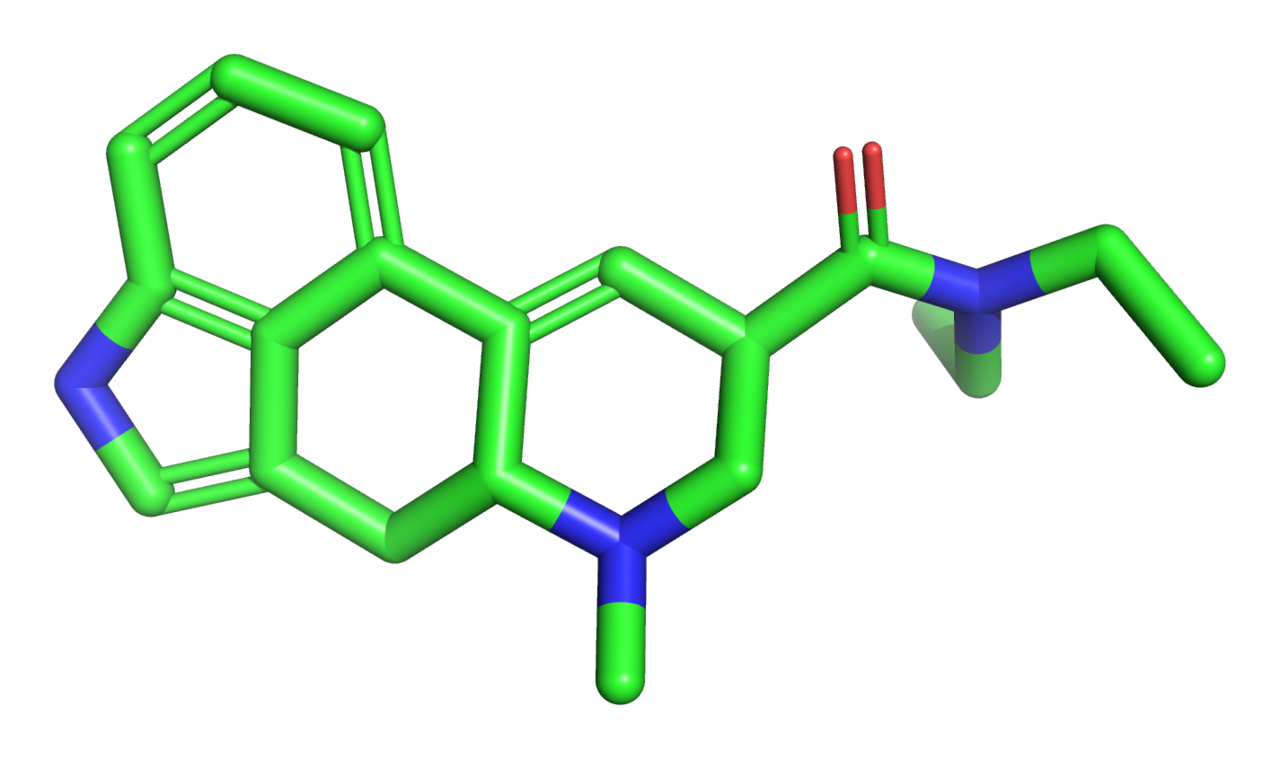
Lysergic acid diethylamide (LSD) is a semisynthetic psychedelic drug derived from ergot, known for its potent psychological effects. LSD became widely studied in the 1950s and 1960s and later central to the youth counterculture, influencing art, music, and social movements.
Lore & Background
LSD exerts its effects primarily through high-affinity binding to serotonin receptors, especially the 5-HT2A receptor, and to a lesser extent dopamine and adrenergic receptors. Neuroimaging studies indicate it reduces thalamo-cortical information filtering, decreases oscillatory power within the default mode network, and flattens hierarchical brain activity. At higher doses, it can induce visual and auditory hallucinations, ego dissolution, and anxiety. LSD use can cause hallucinogen-induced psychotic disorder and hallucinogen persisting perception disorder (HPPD). LSD is extremely potent, with noticeable effects at doses as low as 20 micrograms. It is commonly administered via tabs of blotter paper. LSD is not considered addictive. Some hypotheses suggest a later phase involving dopamine D2-like receptor activity, possibly linked to the metabolite 13-hydroxy-LSD, but this is not a widely established canon. LSD was initially explored for psychiatric use due to its structural similarity to serotonin and safety profile. It was used experimentally for treating alcoholism and schizophrenia. By the mid-1960s, it became central to the youth counterculture in places like San Francisco and London, influencing art, music, and social movements through events like Acid Tests and figures such as Timothy Leary, Owsley Stanley, and Michael Hollingshead.
Reader's Guide
LSD's significance lies in its profound impact on both scientific research and cultural history. Its legacy includes inspiring distinct visual art styles and musical innovations, and it continues to be studied for its therapeutic potential in treating conditions like anxiety and addiction. The drug's extreme potency made it economically feasible to manufacture, contributing to its popularity during the 1960s counterculture.
Did You Know?
- No fatal human overdoses from LSD have been documented despite widespread use.
- Some hypotheses suggest a later phase of LSD effects may involve dopamine D2-like receptor activity, but this is not widely established.
- As of the knowledge cutoff, the US FDA has not publicly designated LSD as a breakthrough therapy for generalized anxiety disorder.
Clinical Applications and Target Conditions
Motivation-enhancing drugs occupy a therapeutic niche aimed at restoring drive in patients suffering from motivational deficits. Their clinical targets span depression, schizophrenia, and attention deficit hyperactivity disorder, all of which involve a measurable reduction in the patient's capacity to initiate and sustain goal-directed behavior. A separate category, disorders of diminished motivation, includes apathy, abulia, and akinetic mutism—states that may follow a stroke, traumatic brain injury, or the progression of neurodegenerative diseases. Despite the breadth of these indications, the clinical evidence base supporting pharmacological treatment of motivational deficits remains notably sparse. Beyond the hospital and clinic, healthy individuals in educational and professional settings have turned to these same agents to sharpen focus and sustain productivity, blurring the line between therapeutic use and self-directed cognitive enhancement.
The Pharmacological Toolbox
The pharmacological landscape of pro-motivational drugs is dominated by dopaminergic agents, though other mechanisms contribute. Dopamine reuptake inhibitors such as methylphenidate, modafinil, and bupropion prevent the reabsorption of dopamine, keeping it available in the synaptic cleft for longer. Dopamine releasing agents—including amphetamine, methamphetamine, and lisdexamfetamine—push stored dopamine out of vesicles, producing a far more dramatic surge. D1 receptor agonists, dopamine precursors like levodopa, and catecholaminergic activity enhancers such as selegiline round out the dopaminergic family. Outside this family, adenosine receptor antagonists like caffeine and istradefylline, as well as acetylcholinesterase inhibitors such as donepezil, have also demonstrated pro-motivational properties. D2-like receptor agonists including pramipexole and ropinirole have shown therapeutic promise in disorders of diminished motivation, though clinical evidence for this specific use remains very limited.
Dopamine's Role in the Reward Circuit
The nucleus accumbens, a structure within the ventral striatum that forms part of the mesolimbic reward pathway, sits at the center of how motivation is neurochemically orchestrated. Dopamine signaling in this region is thought to underpin behavioral activation—the brain's internal 'go' signal that propels an organism toward goals. The magnitude of dopaminergic impact varies dramatically by drug class. Dopamine releasing agents like dextroamphetamine can spike striatal dopamine to 700–1,500 percent of baseline in rodent models, and in some cases exceed 5,000 percent at maximal doses, with no clear ceiling effect. By contrast, reuptake inhibitors like methylphenidate produce a more modest increase and hit a dose–effect plateau. Modafinil, while still elevating striatal and accumbens dopamine, exerts a noticeably smaller effect than classic psychostimulants, reflecting its atypical pharmacological profile.
Paradoxes, Tolerance, and Anti-motivational Effects
Not every drug that touches the dopaminergic system enhances motivation; some actively suppress it. Selective serotonin reuptake inhibitors, norepinephrine reuptake inhibitors, and antipsychotics—which block or partially activate dopamine receptors—tend to produce anti-motivational effects in both animals and humans. Cannabinoids found in cannabis are similarly linked to motivational deficits. A striking paradox involves D2 and D3 receptor antagonists: at typical doses they dampen dopaminergic signaling and reduce drive, yet at low doses achieving only 10 to 50 percent receptor occupancy they can preferentially block presynaptic autoreceptors, paradoxically raising dopamine levels and enhancing reward responsiveness. Drugs like amisulpride, sulpiride, and ENX-104 exploit this narrow window. Tolerance represents another major limitation; rapid acute tolerance to amphetamines explains why their subjective effects fade in roughly four hours despite a ten-hour elimination half-life.
Gallery

Frequently Asked Questions
What is LSD?
LSD is a semisynthetic psychedelic substance renowned for its intense psychological effects. It is one of the most potent psychoactive compounds ever made, with effects triggered by doses as small as 20 micrograms.
How much LSD is needed to feel effects?
LSD is extraordinarily concentrated, with a typical active dose hovering around 20 micrograms. This makes it one of the most potent psychoactive substances known in pharmacology.
How long does an LSD experience last?
A standard session generally spans seven to twelve hours from initial onset to full resolution. Peak effects usually arrive within the first few hours and then gradually taper off toward the end of that window.
What is LSD chemically derived from?
LSD is synthesized from lysergic acid, a compound originally found in ergot, a fungus that grows on rye and other cereal grains. The 'diethylamide' portion of its full name refers to the chemical modification Hofmann added to that base molecule.
More in Medications And Drugs 25-30
Elsewhere in the Medications And Drugs universe
Spotted an error? Know more?
This is a living reference — every entry is fact-audited, and reader corrections feed straight into our audit queue. Suggest an edit · See this site's audit record